Property management fees represent one of the most significant ongoing costs in real estate investment, and tokenized real estate is no exception. Understanding the complete fee structure—from property management to asset management to disposition fees—is essential for investors evaluating the true cost of ownership and projected returns. Unlike traditional real estate investment trusts (REITs) or direct property ownership, tokenized real estate platforms typically offer more transparent fee disclosure and, in many cases, lower overall fees that directly impact your net cash flow.
In tokenized real estate, management fees are deducted at the property level before distributions reach token holders. This means investors receive net income after operational expenses, including property management, have been paid. The distinction between fees paid by the property-owning entity and fees borne directly by token holders matters significantly when calculating actual returns and comparing investment opportunities across different platforms and asset classes.
Who Pays Property Management Fees — and How Much
Property management fees are paid by the legal entity that owns the real estate asset—typically an LLC or limited partnership—not directly by individual token holders. The property manager is hired by this entity to handle day-to-day operations: tenant screening, lease administration, maintenance coordination, rent collection, and property inspections. These services are essential to maintaining occupancy rates and property value, but they come at a cost that directly reduces the gross rental income available for distribution.
Standard property management fees range from 4% to 8% of monthly rental income, with the specific rate depending on property type, location, and the scope of services required. Single-family rental properties often fall on the higher end of this range because managing individual units across multiple addresses requires more administrative overhead per dollar of rent collected. Multifamily properties, particularly larger apartment complexes, typically command fees closer to 4-5% due to economies of scale—one property manager can oversee dozens of units at a single location.
The property management fee is deducted from gross rental income before any distributions are made to token holders. If a property generates $100,000 in monthly rent and the property manager charges 5%, the entity pays $5,000 in management fees, leaving $95,000 (before other operating expenses) to flow through to investors. This structure protects investors from unexpected management costs while ensuring the property remains professionally maintained.
Some tokenized real estate platforms negotiate bulk property management agreements across their portfolio, potentially securing lower rates than individual investors could obtain. This institutional-level negotiating power can translate to meaningful savings when compounded over years of ownership. However, investors should verify that management fees are competitive for the specific asset class and market—a 7% fee might be standard for scattered single-family rentals but excessive for a 100-unit apartment building.
Property management agreements typically include a defined scope of services and responsibilities. Basic services cover rent collection and routine maintenance coordination, while additional fees may apply for lease-up of vacant units (typically 50-100% of one month’s rent), major capital project oversight, or eviction proceedings. These variable costs should be disclosed in the operating agreement, allowing investors to model potential expenses under different scenarios.
Asset Management Fees — What Sponsors Actually Charge
Asset management fees are distinct from property management fees and represent compensation to the sponsor or operator—the entity that structures the investment, sources the property, arranges financing, and oversees the overall asset strategy. While property managers handle day-to-day operations, asset managers make strategic decisions: when to refinance, which capital improvements to prioritize, whether to hold or sell, and how to optimize the property’s financial performance.
Typical asset management fees in tokenized real estate range from 1% to 2% of assets under management (AUM) annually. This fee is calculated based on the property’s value or the total equity raised, not on rental income. For example, if investors contribute $10 million to acquire a property and the sponsor charges 1.5% annual asset management fees, the entity pays $150,000 per year regardless of occupancy or cash flow performance. Some structures calculate the fee on initial equity, while others adjust it based on appraised value, creating potential for fee escalation as properties appreciate.
The asset management fee compensates the sponsor for ongoing responsibilities that extend beyond what property managers provide. These include financial reporting to investors, compliance with securities regulations, coordination with lenders, strategic planning, investor relations, and exit planning. In tokenization platforms that hold multiple properties, asset managers also handle portfolio-level decisions and may provide token holders with consolidated reporting across their holdings.
Investors should evaluate whether the asset management fee structure aligns with their interests. A flat 2% fee provides stable income to the sponsor but doesn’t incentivize performance—the sponsor earns the same amount whether the property appreciates or stagnates. Some platforms incorporate performance-based compensation, where a portion of the asset management fee is tied to cash flow targets or appreciation above a certain hurdle rate. This alignment of interests ensures sponsors are motivated to maximize returns rather than simply collect management fees.
The combination of property management fees (4-8% of rental income) and asset management fees (1-2% of AUM) creates a total management cost structure that typically ranges from 2-4% of total invested capital annually, depending on property performance and capital structure. This compares favorably to traditional REIT expense ratios, which often exceed 1-2% before accounting for their own internal property management costs. Tokenized real estate platforms that consolidate these functions and operate at scale can often deliver institutional-quality management at lower total cost than both REITs and direct ownership alternatives.
Disposition and Exit Fees When Properties Are Sold
Disposition fees are charged when the property is sold and the investment is liquidated. These fees compensate the sponsor for the substantial work involved in preparing the property for sale, marketing to potential buyers, negotiating terms, coordinating due diligence, and managing the closing process. Disposition fees typically range from 0% to 2% of the gross sale price, though some structures charge up to 1% of proceeds or include tiered rates based on performance thresholds.
A property sold for $15 million with a 1% disposition fee would result in $150,000 paid to the sponsor at closing. This fee is deducted from sale proceeds before distributions to token holders, reducing the final return. While disposition fees are only paid once per investment cycle, they can meaningfully impact total returns, particularly for investments held for shorter periods where the fee represents a larger percentage of cumulative distributions.
The structure and disclosure of disposition fees vary across platforms. Some sponsors charge no separate disposition fee, instead relying on asset management fees and a carried interest or profit share to compensate them for exit execution. Others charge a flat disposition fee with no performance incentive. The most investor-aligned structures tie disposition fees to performance—for example, charging 1% only if the sale price exceeds a certain return threshold, or reducing the fee if returns fall short of projections.
Investors should also consider whether the disposition fee compensates for actual value added during the sale process or simply represents additional cost. A sponsor who actively positions the property for maximum value—completing value-add renovations, stabilizing occupancy above market averages, or securing multiple competing offers—can justify a disposition fee through measurably higher exit prices. Conversely, a sponsor who simply lists the property with a broker and charges a disposition fee on top of brokerage commissions may be double-dipping.
Some tokenized real estate structures include contractual provisions that define when and how properties must be sold, preventing sponsors from holding assets indefinitely to continue collecting asset management fees. These provisions protect investors from situations where the sponsor’s interest in ongoing fees conflicts with investors’ interest in liquidity and return of capital. Typical holding periods range from 5 to 10 years, with provisions for extensions only under specific circumstances or with token holder approval.
How Fees Are Disclosed to Investors
Fee disclosure in tokenized real estate is governed by securities regulations and platform-specific standards. The primary disclosure document is the Private Placement Memorandum (PPM) or offering circular, which must detail all fees and compensation arrangements between the sponsor, property manager, and any affiliated parties. This document is provided to prospective investors before they commit capital and serves as the legal foundation for the fee structure.
The PPM includes specific sections outlining property management fees (rate and payment terms), asset management fees (calculation method and payment schedule), disposition fees (rate and triggering events), and any other fees such as acquisition fees, financing fees, or incentive allocations. Many platforms also include fee examples showing how different fees would apply under hypothetical scenarios, helping investors understand the cumulative impact on returns.
The operating agreement or limited partnership agreement provides additional detail about fee payment mechanics, including which entity pays each fee, how fees are prioritized relative to investor distributions, and what happens if cash flow is insufficient to cover all fees. These documents also specify whether fees can be changed without investor approval and what notification requirements apply if fees are adjusted.
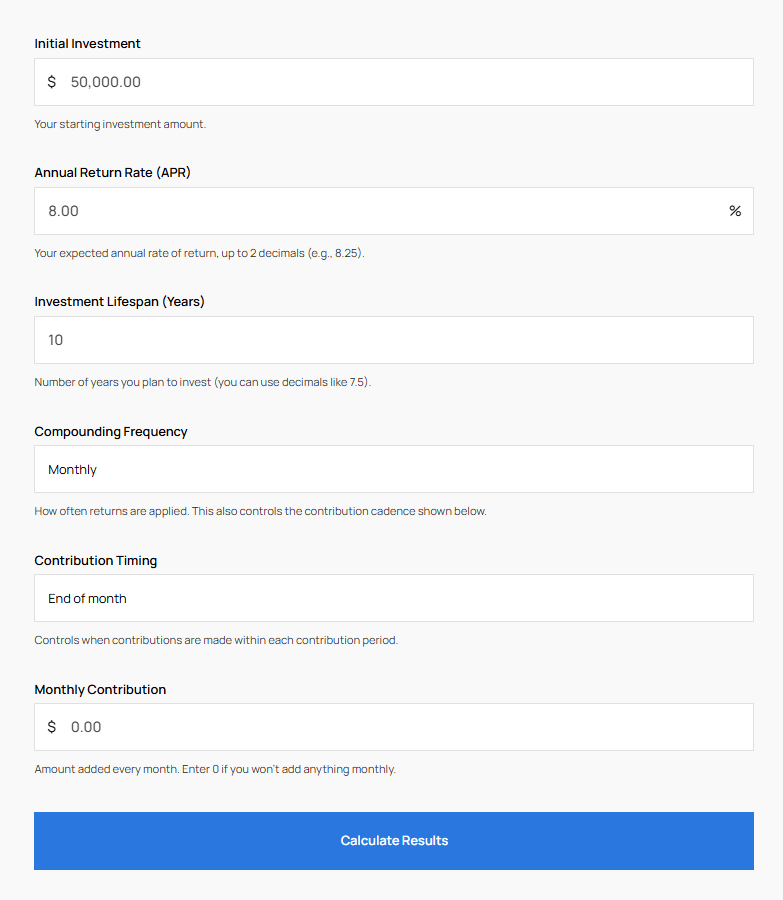
Beyond the legal documents, many tokenized real estate platforms provide simplified fee summaries and interactive calculators that allow investors to model how fees impact projected returns based on different performance scenarios. These tools improve transparency by translating complex legal language into concrete dollar impacts, enabling more informed investment decisions.
Quarterly or annual investor reports should reconcile actual fees paid against projections, showing property management fees as a percentage of collected rent, asset management fees relative to property value, and any other fees incurred. This ongoing reporting allows investors to verify that fees remain within disclosed ranges and identify any unexpected costs that might indicate problems with property performance or sponsor practices.
Regulatory standards for fee disclosure continue to evolve as tokenized real estate matures. The Securities and Exchange Commission (SEC) has increased scrutiny of fee arrangements in private placements, particularly related-party transactions where sponsors charge fees to entities they control. Platforms that proactively provide clear, comprehensive fee disclosure—even beyond minimum regulatory requirements—demonstrate alignment with investor interests and reduce potential for disputes.
Fee Transparency as a Competitive Advantage
Tokenized real estate platforms that prioritize fee transparency gain a competitive advantage by building trust with sophisticated investors who understand that hidden fees erode returns more than disclosed ones. Traditional real estate syndications have historically suffered from opaque fee structures where sponsors collected multiple fees through related-party arrangements—property management through an affiliated company, construction management through another affiliate, and refinancing fees for loan modifications. Each arrangement was technically disclosed but scattered across hundreds of pages of legal documents, making the total cost of ownership difficult to calculate.
Modern tokenization platforms that consolidate fee structures and present them clearly in marketing materials and investor dashboards differentiate themselves in a crowded market. Investors can quickly compare total fee loads across opportunities, favoring platforms where all-in fees (property management + asset management + disposition) total 3% annually over competitors whose complex waterfall structures and affiliate arrangements obscure true costs approaching 5-6% or more.
Lower total fees directly translate to higher net returns for investors. A property generating 7% annual cash flow with 2% in total fees delivers a 5% net return, while one with 4% in fees drops to 3% net—a 40% reduction in actual investor income from identical property performance. Over a 10-year holding period, this difference compounds significantly, particularly when disposition fees are factored in at exit. An investor who deploys $100,000 and earns 5% net annually receives $162,889 after 10 years; at 3% net, the same investment grows to only $134,391—a $28,498 difference driven entirely by fees.
Competitive fee pressure also benefits investors by forcing sponsors to justify their compensation. A platform charging 2% asset management fees must articulate why its services and track record warrant double the cost of a competitor charging 1%. This market discipline encourages operational efficiency and ensures sponsor compensation aligns with the value delivered. Platforms that cannot justify higher fees typically reduce them or risk losing deals to more cost-efficient alternatives.
Fee transparency also reduces legal and regulatory risk. Platforms that clearly disclose all fees and related-party arrangements are less likely to face investor disputes or regulatory scrutiny. The SEC has brought enforcement actions against real estate syndicators who failed to adequately disclose fees or misrepresented how fees would be paid, resulting in fines, disgorgement, and reputational damage. Clear disclosure from the outset protects both investors and sponsors by establishing mutual understanding and consent.
Some tokenized platforms have begun publishing industry benchmark data showing how their fees compare to traditional REITs, private equity real estate funds, and direct ownership. These comparisons demonstrate that professional management through a tokenization platform often costs less than the equivalent services would cost an individual investor purchasing property directly, while providing superior diversification and liquidity features that justify any premium relative to passive REIT ownership.
Calculating the Real Impact of Fees on Your Returns
To accurately assess how fees affect your returns, investors must model both ongoing annual fees and one-time fees across the entire investment lifecycle. Start by determining the property’s projected gross rental income and applying property management fees (typically 4-8%) to calculate net operating income before other expenses. Then subtract operating expenses, debt service, and asset management fees (typically 1-2% of equity) to arrive at projected annual distributions to token holders.
For example, a $10 million property generating $750,000 in annual rent with a 5% property management fee first deducts $37,500 for property management, leaving $712,500. After $200,000 in other operating expenses (maintenance, insurance, property taxes) and $300,000 in debt service, net operating income is $212,500. If the sponsor charges 1.5% asset management fees on $4 million in equity, that’s another $60,000, leaving $152,500 for distribution to investors—a 3.8% cash-on-cash return on their $4 million investment.
However, this annual calculation doesn’t capture disposition fees or the cumulative impact of fees over time. If the property is sold after seven years for $13 million with a 1% disposition fee ($130,000), and investors have received $152,500 annually for seven years, their total cash received is $1,067,500 in distributions plus their share of net sale proceeds. Assuming the $4 million equity loan is paid down to $2.5 million, net proceeds after disposition fees are $10,370,000, of which investors receive $4 million as return of capital plus their pro-rata share of the gain.
Comparing this total return to a scenario with lower fees illustrates the real impact. If property management fees were 4% instead of 5%, and asset management fees were 1% instead of 1.5%, annual distributions would increase to approximately $175,000, generating an additional $22,500 per year. Over seven years, that’s $157,500 more to investors—nearly 4% of their initial capital—from fee savings alone, with no improvement in property performance required.
Investors should also model sensitivity scenarios to understand how fees interact with property performance. In a strong market where rental income increases 3% annually, even a high fee structure may deliver acceptable returns. Conversely, if occupancy declines or rent growth stalls, fixed asset management fees continue regardless, consuming a larger percentage of diminishing cash flow. Properties with high leverage and tight debt service coverage ratios are particularly vulnerable to fee drag—there’s simply less cushion to absorb fees when most cash flow is already committed to lenders.
Excel models or online calculators that accept inputs for all fee types, property performance assumptions, and holding period enable investors to stress-test returns under different scenarios. Many sophisticated investors calculate an “effective fee load”—the total percentage of invested capital consumed by fees over the investment period—to create an apples-to-apples comparison across opportunities with different structures. An investment that charges 2.5% annually plus a 1% disposition fee over seven years has an effective load of approximately 18.5% of initial equity, while one charging 2% annually with no disposition fee is closer to 14%—a material difference.
Finally, consider the opportunity cost of fees. Capital paid in fees is capital not working for you. If you invest $100,000 and pay $20,000 in total fees over the investment period, you’ve essentially invested only $80,000 when calculating true returns. An investment that doubles from $100,000 to $200,000 before fees but pays $20,000 in fees delivers $180,000—an 80% net return, not 100%. Accounting for fees correctly prevents overestimating performance and ensures realistic expectations.
Understand the Full Fee Structure — Connect With Primior
Fee structures in tokenized real estate involve multiple layers, and transparency around those costs is fundamental to evaluating investment opportunities. Property management fees, asset management fees, and disposition fees all impact your net returns, and understanding both the market-standard ranges and the specific terms of each offering allows you to make informed allocation decisions.
Primior’s approach to fee disclosure reflects an institutional commitment to investor alignment. Rather than obscuring costs through affiliate arrangements or burying key terms in legal documents, we provide clear breakdowns of all fees in our offering materials, investor dashboards, and ongoing reporting. Our platform is built on the principle that informed investors make better decisions and that competitive, transparent fee structures benefit all stakeholders.
When evaluating tokenized real estate investments, review the PPM carefully, compare total fee loads across platforms, and model how those fees impact your specific return requirements. Lower fees don’t automatically mean better investments—sponsors who deliver superior property selection, asset management, or exit execution can justify higher compensation—but those fees should be clearly disclosed and aligned with value creation.
If you’re assessing tokenized real estate opportunities and want to understand how Primior’s fee structures compare to market standards, or if you need guidance on modeling the impact of fees on projected returns, our team can provide detailed analysis tailored to your investment criteria. We work with family offices, RIAs, and sophisticated individual investors who demand institutional-quality diligence, and fee transparency is a core component of that standard.
Request a demo to see how Primior’s platform enables granular fee tracking and comparison across our curated property offerings, or contact us to discuss how our approach to cost management and investor reporting can support your real estate allocation strategy.
Understanding where your capital flows—to property operations, sponsor compensation, or investor returns—lets you evaluate opportunities with precision and confidence. In tokenized real estate, where fractional ownership democratizes access to institutional assets, fee transparency ensures that democratization benefits investors, not just sponsors.