Commercial real estate investors face one of the most unforgiving deadlines in tax law when executing a 1031 exchange. The 45-day identification window operates on strict calendar time, not business days, and the IRS grants no extensions for weekends, holidays, or unforeseen circumstances. Despite the potential to defer substantial capital gains taxes, approximately 15% of attempted 1031 exchange transactions fail specifically because investors miss this identification deadline. Understanding why this happens—and how to avoid it—separates disciplined investors from those who forfeit tax advantages and face immediate recognition of gains that could exceed 30% of their sale proceeds when federal and state taxes combine.
The 45-Day Window — Where Most 1031 Exchanges Fail
The Internal Revenue Code Section 1031 establishes that investors must identify potential replacement properties within 45 calendar days of closing on their relinquished property. This timeframe begins the day after the sale closes and includes every calendar day thereafter—weekends, federal holidays, and state holidays all count toward the deadline. Many investors operate under the mistaken assumption that “reasonable effort” or “business days” apply, but IRS regulations permit no such flexibility.
The calendar nature of this deadline creates serious complications when closings occur near month-end or before major holidays. An investor who closes on December 17th faces a January 31st identification deadline that falls during the busiest commercial real estate period of Q1. Weekend closings prove particularly treacherous: a Friday closing means the 45-day clock starts Saturday, often catching investors who assumed they had a full business week to begin their search.
The IRS requires written identification delivered to the Qualified Intermediary before midnight on day 45. Email timestamps, certified mail postmarks, and electronic delivery confirmations serve as proof of timely compliance. Verbal notifications, text messages, and unsigned documents hold no legal weight. Investors who identify properties on day 44 but fail to execute proper written documentation face the same consequence as those who identify nothing: complete disqualification of the exchange and immediate tax liability on the full gain.
The misconception that investors can request extensions or demonstrate good faith effort represents one of the most expensive errors in commercial real estate. Courts have consistently ruled against investors who claimed they “substantially complied” or experienced extenuating circumstances. In private letter rulings and tax court decisions spanning decades, the IRS has never granted relief for missed 45-day deadlines, regardless of the reason.
The Full 1031 Exchange Timeline From Closing to Completion
A complete 1031 exchange operates within two overlapping timeframes, both starting from the same trigger point: the closing date of the relinquished property. The first deadline, the 45-day identification period, requires investors to formally designate potential replacement properties. The second deadline, the 180-day exchange period, establishes the absolute limit for completing the acquisition of replacement property and finalizing the exchange.
The timeline begins when the seller transfers title to the relinquished property. At this moment, the Qualified Intermediary takes control of the sale proceeds, creating the legal framework that prevents the investor from taking constructive receipt of funds—a fatal error that immediately disqualifies the entire exchange. From day one, investors enter the identification phase, which demands rapid execution because market conditions, due diligence requirements, and seller responsiveness rarely align with compressed timeframes.
Between days 1 and 45, investors must analyze markets, tour properties, conduct preliminary due diligence, negotiate LOIs, and submit formal written identification documents to their QI. Professional investors begin this process before selling their relinquished property, developing target lists and establishing relationships with sellers, but even with advance preparation, the 45-day window creates pressure that leads to suboptimal decisions or outright failure.
After day 45, the identification list becomes frozen. Investors cannot add new properties, remove identified properties to add others, or modify their designations in any way—though they can choose to acquire fewer properties than identified or abandon the exchange entirely. This locked-in identification list then governs the final 135 days of the exchange period, during which investors must complete due diligence, secure financing, satisfy contingencies, and close on at least one replacement property.
The 180-day period does not restart or extend based on closing delays, financing complications, or title issues. It runs concurrently with the 45-day identification period, meaning investors effectively have 135 days after identification to close on replacement properties. Tax return deadlines create an additional constraint: if an investor’s tax filing deadline (including extensions) arrives before the 180-day period ends, the exchange must conclude by the tax filing date instead.
What Counts as “Like-Kind” Real Estate Under IRS Rules
The term “like-kind” confuses many investors because it suggests properties must share similar characteristics, use cases, or physical attributes. Under current tax law, however, like-kind means any real property held for investment or business use qualifies for exchange with any other real property held for investment or business use. This broad definition allows significant flexibility in property types while maintaining strict boundaries around what qualifies as investment real estate.
Raw land, improved commercial buildings, multifamily apartment complexes, industrial warehouses, retail centers, office buildings, and even fractional ownership interests in these property types all qualify as like-kind for exchange purposes. An investor can sell a triple-net lease retail property in one state and acquire raw development land in another state, or exchange an apartment building for a portfolio of single-family rental properties, without violating like-kind requirements.
The critical distinction separates investment property from personal-use property. Primary residences, vacation homes used personally, and properties held primarily for personal enjoyment do not qualify for 1031 exchange treatment—though nuanced exceptions exist for properties with mixed personal and rental use that meet specific allocation requirements. Similarly, inventory property held by dealers or developers for immediate resale falls outside 1031 eligibility because it represents ordinary income property rather than capital gain property.
International real estate creates another boundary: U.S. property and foreign property are not considered like-kind under Section 1031. Investors cannot exchange U.S. real estate for property located in other countries, regardless of property type or use. This geographic limitation became more significant after the 2017 Tax Cuts and Jobs Act, which eliminated 1031 exchanges for personal property, aircraft, artwork, and other asset classes, leaving only U.S. real estate eligible for like-kind exchange treatment.
Understanding these distinctions in advance of a sale prevents situations where investors commit to an exchange strategy only to discover their intended replacement property fails to qualify. The definition of like-kind property applies to both the relinquished property and the replacement property, meaning both must independently satisfy the investment-use test.
The Qualified Intermediary — Your Essential Exchange Partner
No individual or entity can complete a valid 1031 exchange by holding their own sale proceeds, even temporarily. The IRS requires that a Qualified Intermediary—sometimes called an exchange accommodator or facilitator—take legal control of funds from the moment the relinquished property closes until those funds transfer to close on replacement property. This prohibition against constructive receipt forms the structural foundation of all successful exchanges, and violating it disqualifies the entire transaction regardless of timing or intent.
The QI must be engaged before the closing of the relinquished property. Investors who close a sale and receive funds—even if they immediately contact a QI and transfer the money within hours—have already triggered a taxable event that cannot be reversed. The exchange agreement with the QI must be signed and filed before the sale closes, establishing the legal framework that allows the QI to receive funds directly from the title company at closing without the investor ever touching or controlling those proceeds.
Beyond holding funds in segregated accounts, the QI prepares assignment documents that restructure the purchase and sale agreements to position the QI as the technical seller of the relinquished property and buyer of the replacement property. This legal assignment allows the investor to identify intent, control property selection, and direct the transaction while maintaining the technical separation from funds required by IRS regulations.
Professional QIs carry errors and omissions insurance, maintain fidelity bonded accounts, and follow strict protocols to protect exchange funds from fraud, misappropriation, or commingling with company operating accounts. The use of qualified escrow accounts at federally insured institutions, held in the investor’s tax identification number, provides additional protection. Despite these safeguards, QI fraud occurs periodically, making due diligence on QI selection critical—investors should verify licensing, insurance coverage, financial stability, and years of operational history before entrusting substantial sums.
The cost for QI services typically ranges from $800 to $2,500 for straightforward exchanges, with complex transactions involving multiple properties, delayed closings, or reverse exchange structures commanding higher fees. This expense represents a small fraction of the tax liability avoided through successful exchange completion, making QI selection a decision based on competence and security rather than fee minimization.
Three Identification Strategies to Meet the 45-Day Deadline
The IRS provides three distinct methods for identifying replacement properties, each with specific rules governing how many properties can be listed and what percentage of value those properties represent. These identification rules exist to prevent investors from creating open-ended option lists that provide unfair tax deferral without genuine commitment to specific replacement properties.
The Three-Property Rule allows investors to identify up to three properties of any value without limitation. An investor can designate three properties worth $1 million, $5 million, and $25 million respectively, and the identification remains valid even though the values differ dramatically from the relinquished property sale price. This rule provides maximum flexibility for investors selling properties in the $2 million to $10 million range who can easily identify three comparable or higher-value replacement options. Most exchanges use the Three-Property Rule because it offers simplicity and breadth without requiring value calculations.
The 200% Rule permits investors to identify more than three properties, provided the combined fair market value of all identified properties does not exceed 200% of the relinquished property sale price. An investor who sells a property for $5 million can identify four, five, or even ten properties, as long as their total value remains at or below $10 million. This rule benefits investors pursuing portfolio diversification strategies, geographic spread, or situations where multiple smaller properties replace one larger asset. The mathematical constraint prevents abuse while allowing legitimate flexibility for investors with specific acquisition strategies.
The 95% Rule operates as a safety valve for investors who exceed the Three-Property Rule and the 200% Rule. Under this method, investors can identify unlimited properties with unlimited total value, but they must ultimately acquire 95% of the total identified value to complete a valid exchange. If an investor identifies ten properties totaling $15 million, they must close on properties representing at least $14.25 million in value. This rule sees limited use because it creates substantial risk—failure to reach the 95% threshold disqualifies the entire exchange, triggering full tax liability on the original sale.
Professional investors typically select one primary target property and two backup alternatives under the Three-Property Rule, ensuring the identification satisfies the safe harbor while providing contingencies if the primary acquisition fails. Sophisticated investors conducting due diligence on multiple opportunities simultaneously may use the 200% Rule to maintain optionality, then pursue the most favorable acquisition as market intelligence develops during the post-identification period. Comparing these strategies against alternative tax-deferred structures helps investors select the optimal approach for their specific circumstances.
Southern California Capital Gains Make 1031 Exchanges Especially Relevant
Commercial and investment real estate in Los Angeles, Orange County, San Bernardino, and Riverside counties has experienced substantial appreciation over the past decade, creating large embedded capital gains for property owners who acquired assets before 2020. Property values in core Los Angeles submarkets increased 60% to 90% between 2012 and 2022, while Orange County coastal assets appreciated 75% to 110% during the same period. These appreciation rates translate directly into significant tax exposure that makes 1031 exchange strategies particularly valuable for Southern California investors.
Consider an investor who purchased a multifamily property in Diamond Bar for $3.2 million in 2015. The same property might command $6.8 million in today’s market, generating a $3.6 million capital gain. At the federal long-term capital gains rate of 20%, California state tax of 13.3%, and the 3.8% net investment income tax on high earners, the combined marginal rate reaches 37.1%. This investor faces approximately $1.34 million in tax liability upon sale without an exchange structure—capital that could otherwise deploy into replacement property, generating continued cash flow and appreciation.
The high basis in California real estate relative to other markets creates a compounding advantage: investors who execute successful exchanges can redeploy their full net proceeds into replacement properties in California or in lower-cost markets with higher cash flow yields. A $6.8 million redeployment into Texas or Arizona multifamily assets might generate 6% to 7% cash-on-cash returns compared to 4% to 5% on comparable California properties, while maintaining the tax deferral and allowing eventual reinvestment back into appreciating California markets when conditions favor capital growth over income.
Newport Beach, Irvine, and Santa Monica investment properties regularly transact at compressed cap rates below 4%, reflecting strong tenant demand, employment density, and land scarcity. Owners of these assets frequently face the dilemma of holding low-yield properties with substantial embedded gains or selling and accepting massive tax bills. The 1031 exchange resolves this dilemma by preserving capital and enabling strategic repositioning without triggering recognition events. For family offices and high-net-worth investors with concentrated California holdings, 1031 exchanges represent essential portfolio management tools.
The California State Legislature has periodically proposed eliminating federal 1031 exchanges or imposing state-level restrictions, making the current favorable treatment uncertain over multi-decade holding periods. Investors who establish systematic exchange strategies now position themselves to respond quickly to policy changes while maximizing tax efficiency under current law.
Avoid the Deadline Trap — Plan Your Exchange Before You Sell
The single most common cause of 45-day deadline failures is not lack of available properties or market conditions—it is lack of advance planning. Investors who list their relinquished property, find a buyer, and only then begin considering replacement options enter the 45-day window without target properties, established seller relationships, or completed preliminary due diligence. This reactive approach transforms a manageable timeline into a crisis.
Successful exchange execution begins six to twelve months before listing the relinquished property for sale. During this planning phase, investors should identify target markets, develop relationships with commercial brokers in those markets, establish lending relationships for acquisition financing, and conduct preliminary screening of potential replacement properties. This advance work does not commit the investor to any specific transaction but creates a prepared list of opportunities that can move quickly once the 45-day clock starts.
Engaging a Qualified Intermediary during the planning phase—not at closing—provides strategic advantages beyond legal compliance. Experienced QIs guide investors through identification strategy selection, explain the practical differences between the Three-Property Rule and 200% Rule, and help structure transactions to avoid common pitfalls. The QI can review purchase and sale agreements before signing to ensure language accommodates the exchange structure, identify potential title issues that might delay replacement property closings, and coordinate with all parties to sequence closings within the 180-day window.
Market analysis during the planning phase should extend beyond identifying specific properties to understanding seasonal liquidity patterns, typical due diligence timelines, and seller motivation profiles. Commercial real estate transactions routinely require 60 to 90 days from offer acceptance to closing, leaving minimal margin for negotiation delays if the identification occurs on day 40 and the investor must close within the 180-day absolute deadline. Investors who pre-negotiate LOIs or place properties under contract with extended closing dates before their relinquished property sells eliminate timing pressure and ensure replacement property availability.
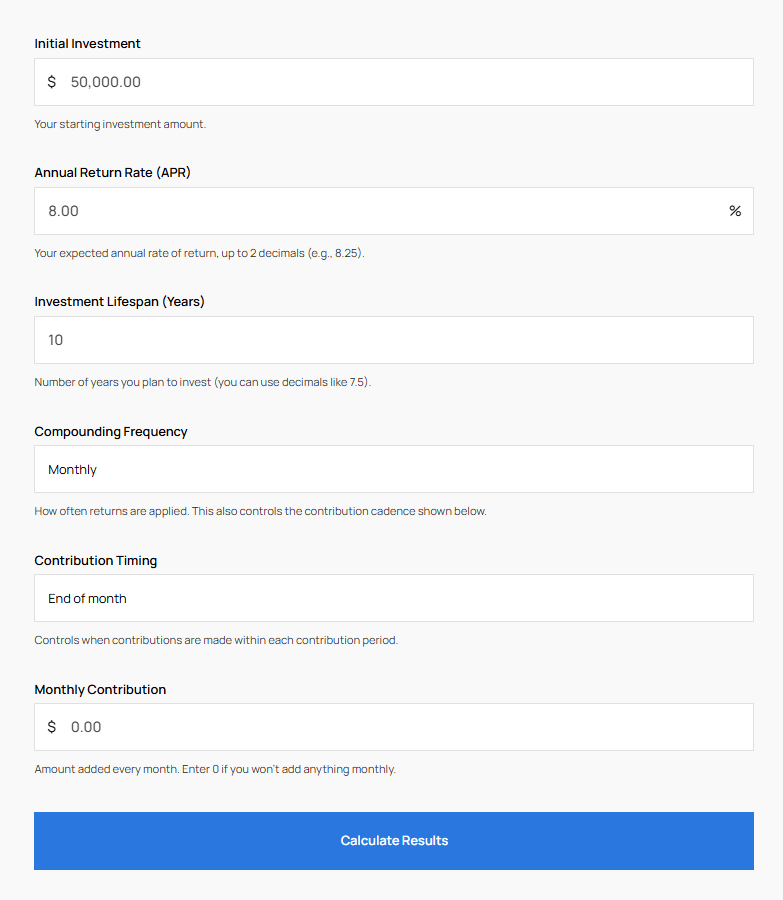
Financial modeling completes the planning process. Investors should analyze replacement property cash flows, debt service coverage ratios, equity requirements, and projected returns using the specific reinvestment amount expected from their relinquished property sale. Running detailed return projections through investment modeling tools reveals whether proposed replacement properties meet return objectives and justify the complexity of exchange execution versus alternative strategies.
The discipline of systematic planning separates sophisticated investors who view 1031 exchanges as standard operating procedure from those who treat exchanges as one-time transactions. Investors who complete multiple successful exchanges over decades build proprietary networks, develop market expertise across multiple asset classes and geographies, and compound tax-deferred capital at rates inaccessible to investors paying tax on each sale. This compounding effect represents one of the most significant wealth creation tools in commercial real estate investment.
For investors evaluating whether exchange complexity justifies the benefits, reviewing comprehensive market research and educational resources provides context for structuring long-term real estate portfolios. As markets shift and opportunities emerge across different property types and regions, the flexibility provided by 1031 exchange strategies enables strategic capital deployment without tax friction—but only for investors who understand the rules, respect the deadlines, and plan transactions with precision.